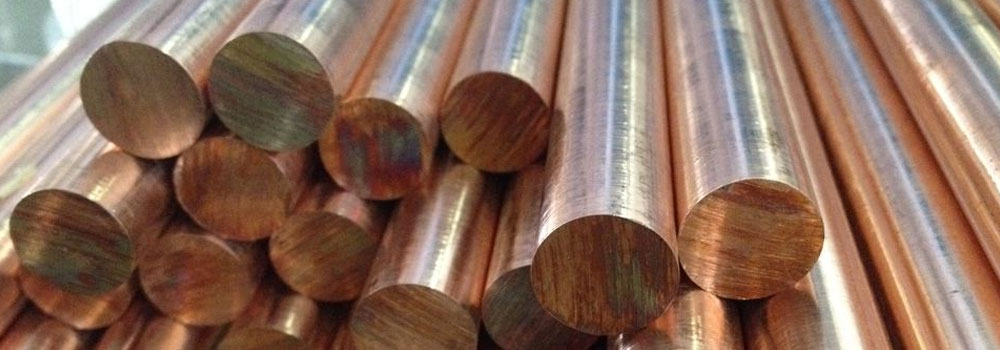
As with EDM (electrical discharge machining), people know that the electrode material is the key to success or failure in cycle time, surface finish and tool wear rate. The tungsten copper rod has become the preferred material for tough EDM jobs, due to its combination of erosion resistance from tungsten and electrical and thermal conductivity from copper, but it's not one material. One is a family of grades, and selecting the wrong grade can cost you rework, electrode wear and inconsistent finishes without you even knowing.
This guide tells you which grade to use for that particular EDM application, how the composition will influence the performance and what you should consider before purchasing from Tungsten Copper Rod Manufacturers in India.
Why Tungsten Copper Rod Is Used for EDM Electrodes
Pure tungsten is very erosion-resistant but difficult to machine and has a relatively low electrical conductivity. Pure copper sparking is beautiful, but also wears out quickly with repeated sparking. Tungsten-copper rod is a sintered composite (tungsten particles infiltrated in the molten copper) that is somewhere between the two, providing you with:
- High resistance to arc erosion and pitting during repeated discharge cycles
- Good electrical and thermal conductivity, so heat dissipates instead of deforming the electrode
- Low thermal expansion, which keeps electrode dimensions stable during long production runs
- Machinability that's still workable compared to pure tungsten
This balance is why tungsten-copper rod is the standard electrode material used in fine-detail EDM, deep-cavity sinking, and micro-machining applications where tolerances of a thousand discharges or less are of significant concern.
What Top Manufacturers in India Are Offering
When it comes to the tungsten copper rod supply base in India, certain consistent trends can be seen based on the way manufacturers market their products
- The grade table above is only a guideline, and the majority of suppliers will make on the whole from W50/Cu50 to W90/Cu10.
- Standards compliance: Tungsten copper rod will most commonly be referenced to ASTM B702 and tungsten copper flat bar to ASTM B777.
- Applications beyond EDM: aerospace connectors and avionics components, resistance-welding electrodes, heat sinks, and electrical contacts are commonly listed alongside EDM electrode use, a sign that the same base material serves several conductivity-critical, wear-critical industries.
- Sizes: from sub-millimetre diameter to approximately 125mm, up to a metre long, cut to size on request.
- Export packaging: Surface damage during shipping directly reduces the performance of the electrode and therefore, the rods are generally shipped in wooden cases, pallets and shrink wrap boxes to protect the electrode surfaces.
- Pricing: The price of tungsten copper rod is set per kg; the larger the size, the lower the price of the rod, and the price varies according to the tungsten content — higher tungsten content, higher price per kg, both raw materials cost, and higher hardness processing cost.
What to Check Before You Buy
Confirm the grade against your discharge energy, not just "tungsten copper" as a generic spec. Request the W/Cu ratio and compare to the table above.
Ask for a Material Test Certificate (MTC) (usually EN 10204 3.1 or 3.2) to ensure that products are not only composed of the correct materials, but of the correct mechanical properties, batch to batch.
Check surface finish options (Turned or Ground finish; this would have an impact on the quality of the surface of the electrode as well as its cost).
Match the standard to your drawing; draw to the spec. ASTM B777 / ASME SB777 is the most popular in India for this product.
Ask about cut-to-size and packaging. Don't hesitate to ask about cut-to-size and packaging, particularly if you are importing – a frequent quality-related grievance with packages that are poorly packed.
Get price per kg, not per piece. When comparing quotes from different suppliers, ask for a price per kg, and not a price per piece, as these prices may vary depending on the density and grade of the items.
Conclusion
For most EDM electrode applications, W70/Cu30 through W75/Cu25 offer the best working balance of erosion resistance and conductivity, while higher-tungsten grades (W80/Cu20 and up) suit heavier-duty, high-energy discharge work. Whichever grade fits your process, buy against ASTM B777 with an MTC in hand, and confirm pricing on a per-kg basis so you're comparing apples to apples across Tungsten Copper Rod Manufacturers in India.
FAQs
Which tungsten copper rod grade is best for EDM electrodes?
W70/Cu30 and W75/Cu25 are the most commonly used grades for general EDM die-sinking and mould-cavity work, offering a practical balance between erosion resistance and electrical conductivity. Higher-tungsten grades like W80/Cu20 or W90/Cu10 are used for high-energy discharge or heavy-duty applications where longer electrode life matters more than machinability.
What is the difference between W70/Cu30 and W80/Cu20 tungsten copper rod?
W70/Cu30 has higher copper content, giving it better conductivity (around 42% IACS) and easier machining, while W80/Cu20 has more tungsten, raising hardness, density, and bending strength at the cost of some conductivity (around 34% IACS). W80/Cu20 suits harsher, higher-wear EDM conditions; W70/Cu30 suits general-purpose work.
What standard applies to tungsten copper rod in India?
ASTM B777 and ASME SB777 are the standards most commonly referenced for tungsten copper rod and bar stock supplied by manufacturers in India. Some suppliers also reference ASTM B702 for related tungsten copper bar products.